delivering change

on the ground

For decades, conservation groups, farmers, landowners and communities across North Kent have been restoring habitats and bringing back wildlife, site by site - and that good work continues.

But nature doesn't stop at field boundaries, and the climate change pressures facing this landscape - drought, flooding, sea-level rise, extreme heat - are bigger than any single site can address.

Chalk to Coast exists to deliver nature recovery on a landscape scale: expanding and connecting fragmented habitats, and providing climate change resilience to local communities at risk. These are the projects making it happen…
OUR CORNER OF KENT

irreplaceable habitats

  • Coastal Wetlands

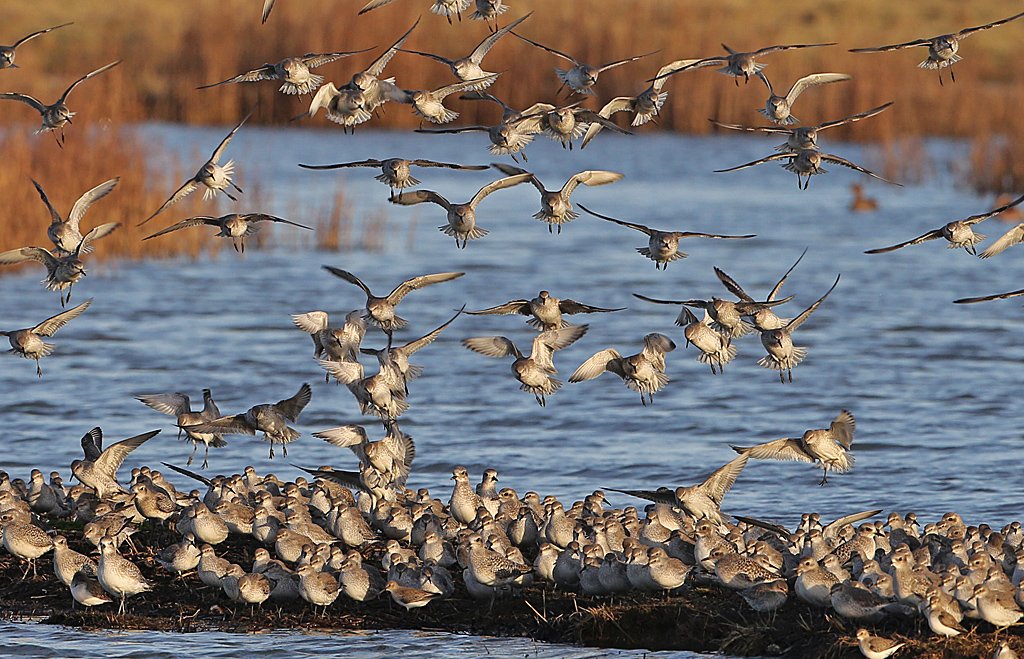
    The confluence of three great estuaries — the Swale, the Medway and the Thames — this 16,500ha area forms one of northern Europe's most important wetland landscapes, protected under international law for the tens of thousands of migrating birds that return to them each winter.

  • Chalk Grassland

    Chalk grassland is one of the rarest habitats on Earth — the UK holds around half of all that survives, despite having lost 80% of its total.

    Barely 40,000 hectares remain across the whole country; with only 700 hectares of unimproved Chalk Grassland in the Kent Downs.

    Acre for acre this habitat is richer in species than a rainforest, and is disappearing. Chalk to Coast exists to stitch the last fragments back together.

  • Ancient Woodland

    Ancient woodland (continuous wooded since before 1600) covers barely 2% of Britain. The Kent Downs is one of Britain's most wooded landscapes - nearly a quarter tree cover, most of it irreplaceable ancient woodland -

    Above ground, one ancient oak alone can shelter more than 2,000 species. Beneath the surface, centuries of undisturbed soil hold miles of living fungal networks, through which the forest shares water, carbon and even warning signals.

    Once it's gone, ancient woodland cannot be replanted. Chalk to Coast plans to expand and connected fragmented pockets of woodland across the landscape.

  • Chalk streams

    There are fewer than 300 chalk streams on Earth — and around 85% of them are in England.

    They are unlike any other river: not fed by rain, but welling up cold and clear from deep in the chalk, running at an almost constant temperature all year and rich in the minerals that make them rich in biodiversity.

    Where chalk meets clay along the Kent Downs, chalk springs pop up from the ground. Chalk to Coast is working to identify and restore our precious chalk streams.

  • coastal waters

    Where the corridor meets the sea, two of Britain's most quietly vital habitats are hanging on.

    Seagrass - underwater meadows that lock away carbon, filter the water and cradle young fish - has vanished from up to 87% of the Greater Thames Estuary.

    Native oysters, each filtering scores of litres of seawater a day, have fallen by more than 95%.

    Yet in the Medway and Swale, nearly 40 hectares of seagrass still survive, a remnant oyster population clings on, and restoration by ZSL has already begun.

species spotlight

  • turtle dove

    Every spring the turtle dove returns to North Kent, having flown some 5,000 kilometres from sub-Saharan West Africa.

    With a 99% UK decline since the late 1960s, it was thought gone for good from the Hoo Peninsula.

    With support from RSPB’s Operation Turtle Dove, this farmland bird has returned and the farmers who work this land heard it purring in the scrub again.

  • European eel

    The European eel makes one of the planet's greatest migrations — over 6,500 km from its Sargasso Sea breeding grounds to the marshes of the Medway and Swale.

    But it is critically endangered, down 95% in a single generation, and man-made barriers now block its migratory path up the River Medway.

    Lets remove these barriers and help to reconnect part of their extraordinary journey.

  • maidstone mining bee

    For nearly ninety years the Maidstone bee was thought lost to Britain, it was last recorded in 1934. Then in 2020 it reappeared at Trosley, on the slopes of the North Kent Downs.

    Its foothold here hangs by a thread, and on the kind of grazed, open chalk grassland that we are working to restore.

  • nightingale

    Few sounds in nature are as celebrated as the song of the nightingale.

    British numbers have collapsed by more than 90% in fifty years. The Hoo Peninsula and north Kent are now among its last strongholds.

    A summer visitor that crosses the Sahara to breed here, the nightingale needs areas of wet ground, dense scrub and some bare ground beneath it to thrive.

  • shrill carder bee

    The shrill carder bee is Britain's rarest bumblebee, clinging on in just five isolated pockets after the flower-rich grasslands it needs were lost to intensive farming from the 1950s on.

    Its largest stronghold strongholds is the Thames Estuary — the sea-wall and grazing-marsh grasslands of the Hoo and the Swale, at the very heart of this corridor.

    It is a late-nesting bee that depends on well managed grasslands with an unbroken succession of wildflowers from May right through to October.

NATURE RECOVERY PROJECTS 

Our projects are designed to deliver impact where it’s needed the most. But we can’t deliver nature recovery without your support! Please get in touch to partner with us.