
NORTH KENT COASTAL RESILIENCE PROJECT
CORE INTERVENTIONS
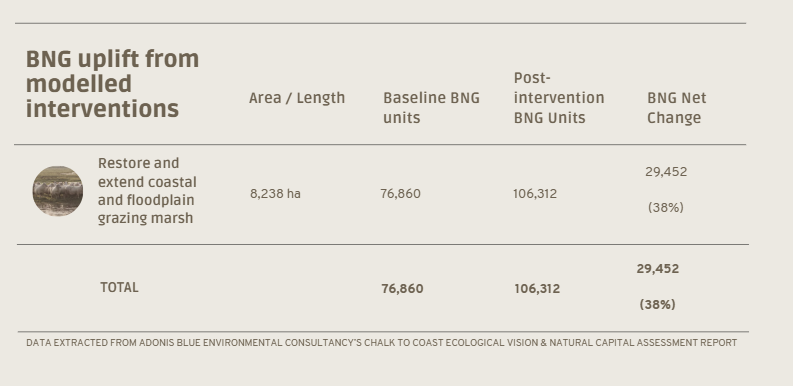
Coastal and floodplain grazing marsh restoration
Managed re-alignment
Saltmarsh restoration
Water storage on marginal land for marsh re-wetting
Reedbeds and saline lagoon creation
Nutrient interception measures
Ground-nesting bird protection
INVESTMENT OUTCOMES
Risk management: increased resilience to flooding and climate change
Corporate sponsorship for internationally important coastal landscape
Carbon removal for the emerging blue carbon market
Coastal habitat BNG units
Local fishing industry resilience
Bathing water quality improvement
Access to nature for deprived communities
PROJECT OVERVIEW
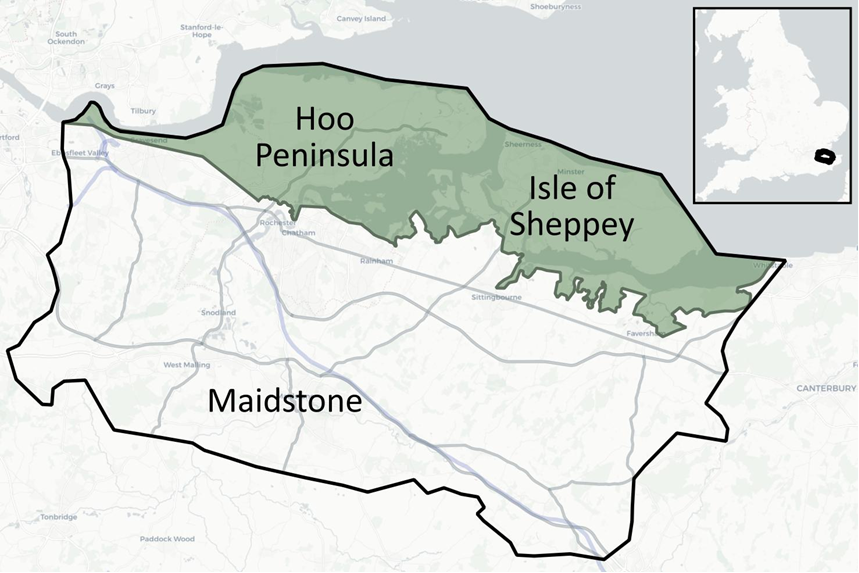
SCALE: 37,579 ha
LOCATION: north Kent Marshes, along the Thames, Medway and Swale estuaries.
CORRIDOR ROLE: The final filtration and buffering system before land meets sea - delivering biodiversity enhancement, climate adaptation and coastal protection for internationally designated sites for bird communities.
ECOSYSTEMS SERVICES & BENEFITS
Reduced coastal flood and erosion risk close to urban centres and key infrastructure
Carbon storage and sequestration
Nutrient pollution reduction and water quality improvement
Recovery of threatened habitats and species
“”
NATURAL CAPITAL ESTIMATES
SPECIES & HABITAT HIGHLIGHTS
SALTMARSH, MUDFLAT & SEAGRASS:
Saltmarsh, mudflat, seagrass meadows and native oyster beds are among the most valuable habitats on Earth for carbon storage, flood defence and marine life - and among the most threatened by coastal squeeze.
Across the Medway and Swale, Chalk to Coast analysis indicates over 300 ha of coastal habitat could be lost by 2105 under current shoreline management, unless space is created for it to move inland.
COASTAL BIRDS
The Medway and Swale hold internationally important populations of migratory, breeding and wintering waders and wildfowl - the reason for their SSSI, SPA and Ramsar designations - with the lapwing and the top-predator marsh harrier among the flagship species.
SHRILL CARDER BEE:
The shrill carder bee, one of the UK's rarest bumblebees, survives in only a handful of places nationally, the North Kent marshes among its last strongholds.